2011-02-11Integration & The Metropolis

img

The Institute for multicultural issues -FORUM- has a number of people with diverse backgrounds asked to use their profession to think about integration and the city. To integration in the public-public debate is often only from an ethno-cultural perspective approached. With a publication and a debate, some new aspects explored. Central question is: what does integration in 2040 and what role Randstad will play as metropolis?

Together with Paul Diederen I have written the article Gewenste scheiding, ongewenste afscheiding for this publication. In this article we will discuss the significance of walls and fences in the city. The publication also include articles of Liesbeth van der Pol , Hans Boutellier , Frans Timmermans , Ergün Erkoçu , Sadik Harchaoui and Renée Frissen .

The book launch of Integration & the Metropolis, Prospects for 2040 is wednesday, February 16, 2011 and will take place in Het Strijkijzer, Hofwijckstraat 8 in The Hague. Subscribe to Forum

photo: Flickr/ R. Wijnants

2011-02-01Souper #21

img

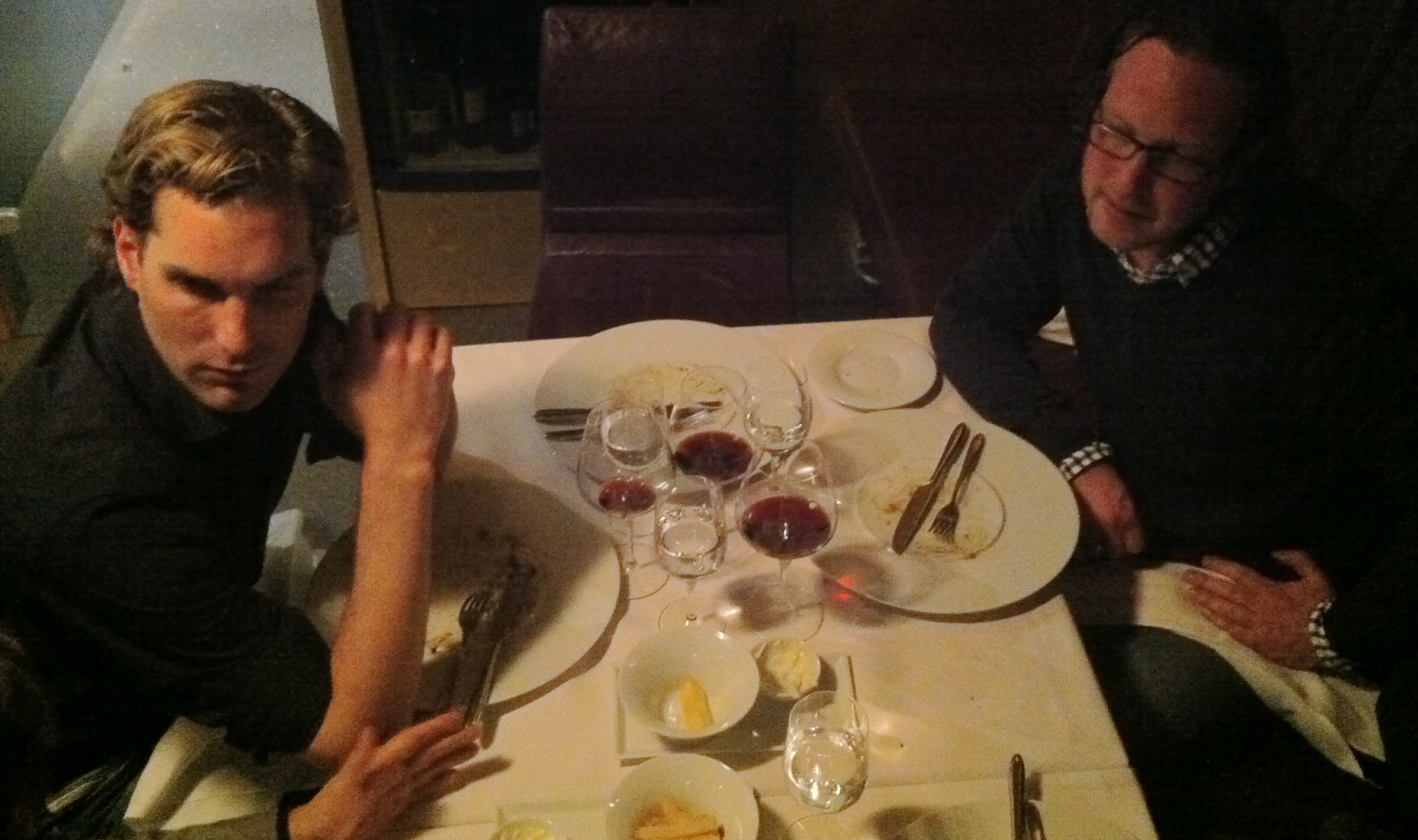
Yesterday we had the first soupr of this year. The architect Joost Kühne (architectenburi Kühne & Co) and (re) developer Michon van der Salm (CODUM) were our guests. The enthusiasm and entrepreneurship of Michon and Joost is infectious. Both are very driven to transform non-places to residence and decrepit buildings into creative hotspots. This evening it becomes clear that traditional knowledge and skill of the architect is still valued and there is a new generation of developers who is clever and have good intentions with the city.

We have once again an excellent dinner at restaurant Huson . Unfortunately I forgot to take pictures.

Daan Bakker (Daf-architecten), Jeroen de Willigen (DeZwarteHond), Jasper de Haan (architect) and I invite each month a number of colleagues to eat, drink and discuss about our profession, the city of Rotterdam and related matters.

2011-01-16One Bridge to Bar

img

Bicycles in Deltapoort area

The Deltapoort area is the zone between the large river landscapes of Dordrecht and Rotterdam. By the diversity in use of the landscape it is considered as of the most fragmente of the Southern edge of Randstad. The large differences between the polder landscape and infrastructure, village and city, place the region under a strongly pressure.

For a week students of Academy of Architecture Amsterdam explore under the guidance of Artist in Residence Jeanne van Heeswijk the possibilities and impossibilities of opening up the Deltapoort zone with new cycle routes and connections to enhance the quality of the area.

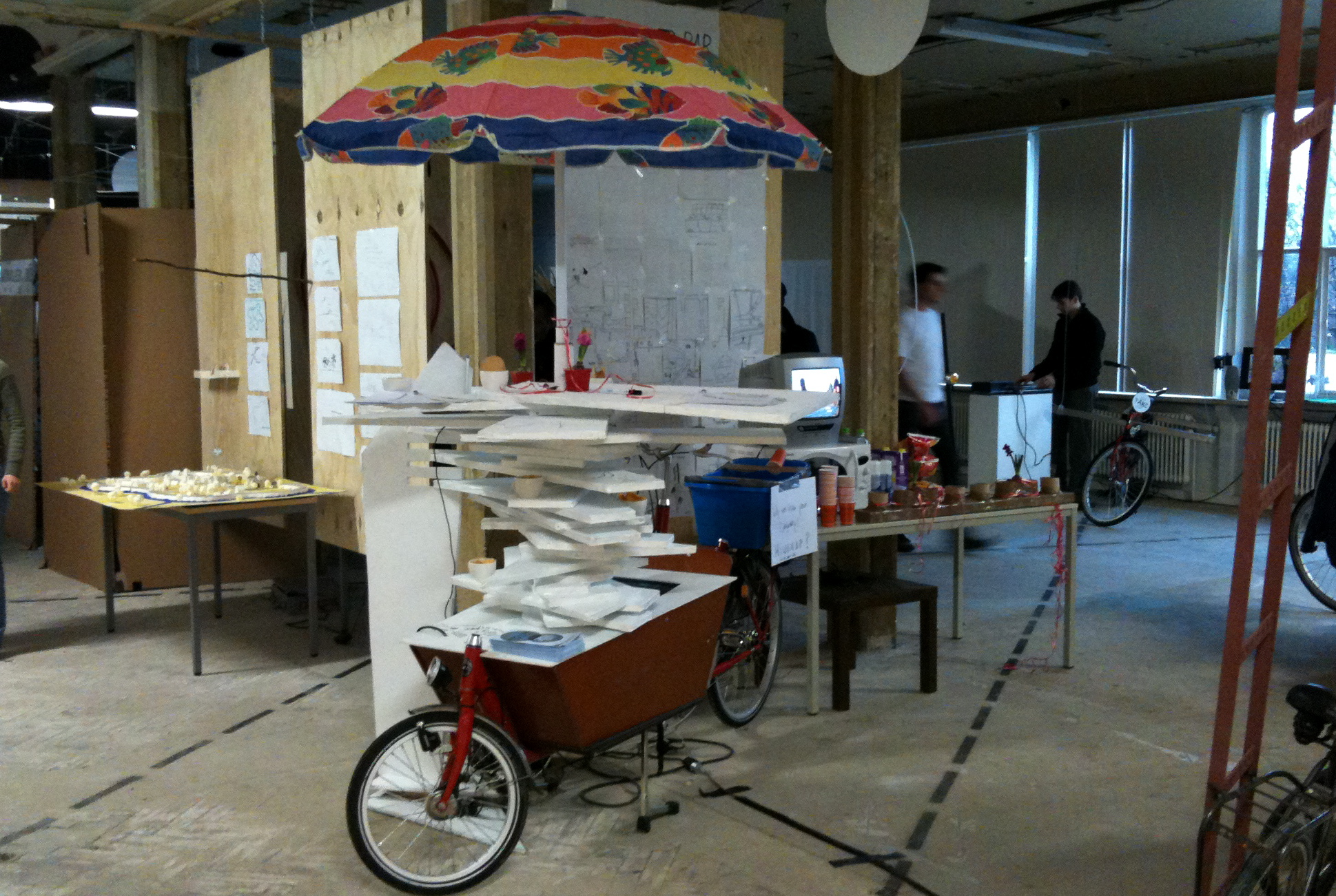
With Jasper de Haan I was tutor of a group students. Our students interviewed a number of people from the area. This provided an interesting information and a large number of mental maps of the inhabitants and users of the area. It was striking that many people have a negative opinion concerning the area. The students have tested a prototype of a bar on several bridges and as a final result they have designed a bar bicycle. This bar can emerge unexpecteds in the area to serve as social condenser. With a drink it's possible to study the opinions and mental maps of other people of the area.

On Friday 14 January the final results have been presented in the atelier in Zwijndrecht. During the workshop gained knowledge and experience is used by Van Heeswijk in developing a new art project for the Deltapoort zone.

2010-11-30Souper #20

img

Yesterday we had an exciting evening with Jasper Jägers Concept Developer at TCN Property Projects and David Tuinzing conceptionist by area developer Concire. The men explained us what concept development really is. Also nice to know that power of project developers is over. The crisis is good for something. We can finally design the right program on right place. And as architects and urban planners are willing to develop knowledge in the field of real estate then things becoming interesting.

It is now predictable, but again we have a wonderful meal at restaurant Huson

Daan Bakker (Daf-architecten), Jeroen de Willigen (DeZwarteHond), Jasper de Haan (architect) and I invite each month a number of colleagues to eat, drink and discuss about our profession, the city of Rotterdam and related matters.

2010-11-04Smart city, Brilliant countryside, wonderful life

img

A world exhibition about Dutch knowledge economy

(text in Dutch)
De wereldtentoonstelling in Shanghai heeft haar deuren gesloten. Het is de best bezochte tentoonstelling ooit. Precies 73.084.400 mensen bezochten Better City, Better Life. Volgens de organisatie bezochten slechts 3,5 miljoen buitenlanders de Expo, de overige 68,5 miljoen bezoekers kwamen allemaal uit China zelf. Volgens de laatste telling wonen er zo’n 1,3 miljard mensen in China. Dus krap 5% van de totale bevolking heeft maar de Expo bezocht. Waarschijnlijk valt dit percentage nog lager uit omdat net een paar miljoen ambtenaren en vrijwilligers opnieuw zijn begonnen met tellen. De volkstellers komen langs de deur en noteren het aantal inwoners per woning, volgend jaar april weten wij de nieuwe stand. Niemand zal verbaasd zijn als blijkt dat er nog meer Chinezen zijn op aarde en dat er wellicht nog meer mensen wonen in de verschillende grote steden van China. Wat mij wel verbaasd is de middeleeuwse manier van statistisch onderzoek en dat het gebrek aan betrouwbaar cijfermateriaal geen belemmering is voor economische vooruitgang en ruimtelijke ontwikkelingen.

De trek naar de stad en het gegeven dat meer dan de helft van de wereldbevolking in een stedelijk gebied woont stonden centraal in de themapaviljoens van de wereldtentoonstelling. Met spectaculaire tentoonstellingen zijn met name de kansen voor stedelijke ontwikkelingen getoond. Het optimisme is groot. Sterker nog. Wij worden geacht verder na te denken hoe wij de groei moeten gaan realiseren in bestaande en nieuwe steden. In 2030 woont naar verwachting driekwart van de bevolking in steden. De vraag is of deze eenzijdige manier van denken wel verstandig is. Wat en wie laten wij achter op het platteland en moeten hier niet serieuzer mee omgaan? Toen het communisme zichzelf ophief dachten wij ook even dat het kapitalisme had gewonnen. De vreugdestemming duurde niet zo heel lang, na een aantal crisissen weten wij nu wel beter. Hetzelfde geldt voor de stad. Het economisch succes van de van de stad wordt op termijn haar eigen ondergang. De geschiedenis leert ons dat de trek naar de stad een keer zal ophouden, misschien wel voor 2030. Op termijn zal een balans ontstaan tussen de stad en het platteland en over een aantal decennia zal weer een trek uit de stad beginnen. Dit issue is nog te ver weg. Tenminste zo lijkt. Stad en land hebben echter een wederzijdse afhankelijkheid. Op dit moment is deze afhankelijk niet is gebaseerd op gelijkheid. Enkel en alleen over de stad van de toekomst nadenken is veel spannender. De stad is op dit moment de winnaar en het is nu eenmaal leuker op bij de winnaar te horen.

In 2012 organiseert Venlo de Floriade, een internationale tuinbouwtentoonstelling die ook onder auspiciën staat van de Bureau International des Expositions, net zoals de tentoonstelling in Shanghai. Op de Floriade laten wij onze kennis op gebied van tuinbouw zien en dat doen wij niet voor de eerste keer. Deze negentiende tuinbouwtentoonstelling is al voor de zesde keer in Nederland. Moeten wij niet eens gaan voor een echte internationale wereldtentoonstelling?

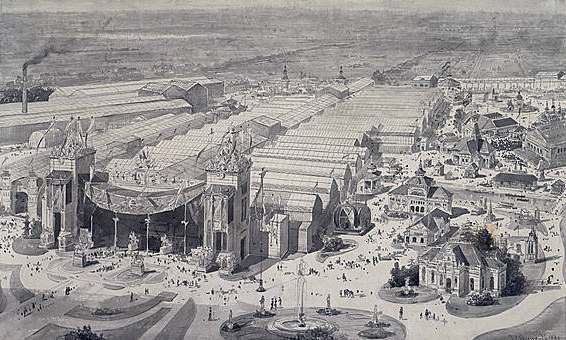
Als wij in Nederland nu eens serieus werk gaan maken van kenniseconomie en tevens relatie tussen de stad en het platteland minder polariserend bekijken, dan kunnen wij misschien wel een vitaal model voor verstedelijking ontwikkelen. Een model dat is gebaseerd op een gelijkwaardige afhankelijkheid van stad en land en waarin op een ideale manier kenniseconomie wordt gefaciliteerd. Sinds de 19e eeuw is er geen wereldtentoonstelling meer geweest in Nederland. In 1883, 1887 en 1895 zijn wereldtentoonstellingen op het Museumplein in Amsterdam georganiseerd. Het wordt weer eens tijd. Wij hebben, als wij het goed aanpakken, ook weer iets te melden. Meer dan 73 miljoen bezoekers zullen wij niet gaan halen vrees ik, maar wat wij wel hebben is een tentoonstelling die onderbouwd is met echte cijfers en het grootste tentoonstellingsterrein ooit: 41.528 km². Heel Nederland.

Beeld: Wereldtentoonstelling in 1883 op het huidige Museumplein in Amsterdam; J.C. Greive.